

Lending Character: A Second Life for Ordinary Buildings
a+t 64, the new issue of the 2ndHAND series, explores how everyday mid-twentieth-century architecture adapts to new uses, guided by a decalogue of ten operations.
October 26, 2026

What do we do with buildings that no one ever considered exceptional? The 2ndHAND series of a+t magazine starts from a contemporary conviction: transforming what we have inherited is now one of the central tasks of architecture. It is neither about preserving nor replacing, but about activating what already exists.
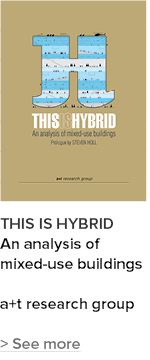
Following Hybrid Buildings, the new issue in the series, a+t 64 Lending Character, turns its attention to an underappreciated heritage: the ordinary buildings constructed in the mid-twentieth century. It is these buildings, rather than the great monuments, that today account for a large share of interventions on built heritage.
Unlike architectures with a strong character, these buildings adapt more easily to new programmes, to indeterminate uses and to the transformations still to come. A change of use gives them a second chance.
A decalogue, not a style
The projects gathered in this issue do not pursue a new formal coherence. What unites them is a way of acting. That is why, as a common thread, Lending Character proposes a decalogue: not a style, but a code of conduct that makes the most of the existing building’s lack of character.
Its ten operations shift the focus:
- from form to processes,
- from composition to logistics,
- from permanence to transformation,
- and from appearance to experience.
Six ways of lending character
The issue brings together projects by EMI Architekt*innen, MAKER architecten, Atelier XÜK, AgwA, Eagles of Architecture and Carmody Groarke. These are practices working in different contexts and at different scales which, without sharing a common language, agree on an attitude: starting from what is there, accepting its limitations and turning them into opportunities. In their interventions, the decalogue stops being a statement of principles and becomes built practice.
The issue is completed by two interviews conducted by Javier Mozas, director of the magazine: one with Elli Mosayebi of EMI Architekt*innen, and another with Benoit Vandenbulcke and Hélène Joos of AgwA. Two conversations that offer an inside view of how to work with the existing and what it means to intervene in buildings that do not ask to take centre stage.
English/Spanish (23.5 x 32 cm)


RELATED POSTS
|


 I've read and agree to