's-Hertogenbosch (1)
Aalborg (1)
Aalst (1)
Aarhus (1)
Affligem (1)
Aichi (1)
Albissola (1)
Alcacer do Sal (3)
Alessandria (1)
Algeciras (1)
Alicante (1)
Almere (4)
Antwerp (4)
Antwerp (1)
Amsterdam (22)
Arnhem (1)
Úbeda (1)
Atlanta (2)
Atsugi (0)
Águilas (1)
Evora (1)
Ballerup (1)
Barcelona (53)
Basel (7)
Bègles (1)
Belgrado (1)
Benidorm (1)
Berlin (10)
Bilbao (7)
Bogota (2)
Boston (5)
Boulogne Billancourt (2)
Brasilia (2)
Brasilia (0)
Bremen (1)
Brussels (8)
Bubikon (1)
Buenos Aires (1)
Bordeaux (19)
Cambridge (3)
Cádiz (1)
Córdoba (2)
Cerklje (1)
Ceuta (3)
Chengdu (1)
Chicago (18)
Cape Town (0)
Coimbra (1)
Colmenar Viejo (1)
Como (1)
Copenhagen (43)
Coslada (1)
Creus (3)
Cuevas del Almanzora (1)
Culemborg (1)
Cully (1)
Dallas (1)
Denver (2)
Derendingen (0)
Dessau (2)
Dijon (2)
Donostia-San Sebastián (1)
Dubai (3)
Dulliken (1)
Dunkirk (1)
Durango (1)
Eberswalde (1)
Eindhoven (3)
Elmswell (1)
Istambul (1)
Fürth (0)
Philadelphia (2)
Florence (3)
Formoso do Araguaia Tocantins (1)
Fredericia (1)
Fribourg (1)
Gaasbeek (1)
Ghent (11)
Gardouch (0)
Girona (1)
Gonesse (1)
Gouda (1)
Graz (3)
Greensboro (2)
Grenoble (2)
Groningen (4)
Guangzhou (2)
Haarlem (1)
Hamamatsu (6)
Hamburg (4)
Hanoi (1)
Hanover (1)
Helsinki (4)
Holbaek (1)
Hoofddorp (1)
Houston (0)
Houston (0)
IBIZA (0)
(0)
Innsbruck (2)
Inujima (5)
Jersey City (1)
Køge (0)
Kilchberg (1)
Kyoto (4)
Knokke-Heist (1)
Kobe (4)
Kolding (1)
Kuwait (1)
Havana (5)
Landquart (1)
Las Palmas (1)
Le Havre (1)
Lille (2)
Lima (2)
Lincoln (1)
Lisbon (4)
Ljubljana (10)
Llantwit Major (1)
Lleida (2)
Lohja (1)
London (62)
Longyearbyen (2)
Los Angeles (3)
Los Palacios y Villafranca (1)
Louisville (3)
Lousada (1)
Louviers (1)
Leuven (2)
Lustenau (1)
Lyon (3)
Maasbracht (1)
Madrid (54)
Mafikeng (2)
Magdeburg (1)
Mechelen (1)
MAJORCA (0)
MALMOE (0)
Malpica (1)
Maribor (2)
Marseilles (2)
Málaga (1)
Meiningen (1)
Melbourne (4)
Melle (1)
Merchtem (1)
Mexico DF (4)
Miami (3)
Mieres (2)
Milan (14)
Millwaukee (2)
Milwaukee (0)
Mongat (0)
Monte Carasso (1)
Montjoire (0)
Montreal (1)
Mortsel (1)
Moscow (8)
Munich (11)
Murcia (1)
Nagoya (1)
Nanjing (1)
Nanterre (2)
Nantes (4)
Naoshima (3)
Newcastle-upon-Tyne (1)
Nieuwegein (1)
Niterói (1)
Noormarkku (1)
Norway (1)
New York (31)
New Hampshire (0)
Nuremberg (1)
Oberentfelden (1)
Okayama (3)
Porto (2)
Oslo (5)
Oudenaarde (2)
Pantin (2)
Paris (69)
Parma (1)
Beijing (4)
Phoenix (2)
Poissy (1)
Prague (2)
Presov (1)
Providence (3)
Puteaux (2)
Rabat (0)
Ravenna (1)
Rotterdam (24)
Reggio Emilia (1)
Reus (3)
Riga (1)
Riihitie (1)
Rodovre (1)
Rome (3)
Romainville (0)
Runcorn (1)
Saint Etienne (2)
Salzburg (1)
Samobor (1)
San Francisco (7)
San Vicente del Raspeig (1)
Sant Just Desvern (0)
Sant Just Desvern (1)
Santander (1)
Santiago de Compostela (1)
Sao Paulo (3)
sànt feliu de Llobregat (0)
Scottsdale (1)
Seattle (3)
Seoul (5)
Semmerzake (1)
Sevilla (4)
Sheffield (2)
Shenzhen (2)
Singapore (4)
Sittard (1)
Spremberg (2)
Suffolk (1)
Suresnes (1)
Sydney (4)
Taichung (1)
Taipei (2)
Takamatsu (4)
Tallinn (1)
Tartu (1)
Tel Aviv (4)
Tempe (1)
Tenri (1)
Teshima (0)
Tokyo (19)
Toledo (1)
Toronto (7)
Tromso (1)
Trondheim (2)
Troyes (2)
Turin (2)
Turku (1)
Uithoorn (1)
Utrecht (2)
Vancouver (1)
Venice (1)
Vicenza (1)
Victoria (1)
Vienna (6)
Vila do Conde (1)
Vila Nova de Gaia (1)
Vila-Seca (1)
Viladecans (2)
Vitoria-Gasteiz (4)
Wallisellen (1)
Walsall (0)
Washington (1)
Winterthur (3)
Yokohama (0)
Ypenburg (2)
Zaanstad (1)
Zaragoza (7)
Zurich (24)
Zuiderplein (0)
Zwolle (3)

Photo: Michael Heinrich
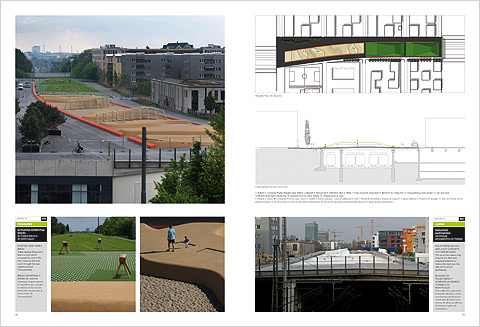
Project published in a+t 37 Strategy Space
Theresienhöhe is a new neighbourhood close to the centre of Munich, built on the lands of a former trade fair centre which has now been dismantled. The city planning...
(more...)
Theresienhöhe is a new neighbourhood close to the centre of Munich, built on the lands of a former trade fair centre which has now been dismantled. The city planning project is a dense group of...
(more...)


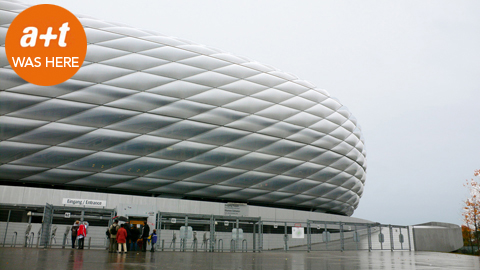
The Allianz Arena stadium replaced the Olympic Stadium (see post Frei Otto, Günther Behnish. Olympic Stadium. Munich) as home of local teams' football matches.
In its favour it has the fully-covered seating, a host of commercial spaces underneath the stands, comparable to that of a shopping mall (event rooms, souvenir shops, restaurants, club offices, several food and.
(more...)
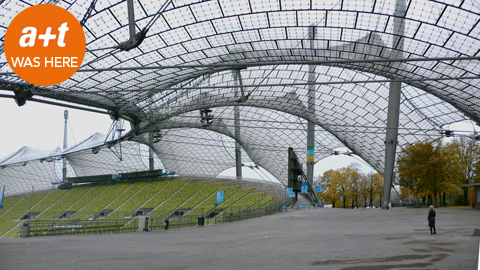
In a conversation which took place with Juan María Songel (GG Barcelona, 2008 p 91) Frei Otto regrets that the Olympic stadium roof could not be lighter, owing to the necessity to adapt it to a form previously designed by the winner of the competition, the architect Günter Benisch.
(more...)
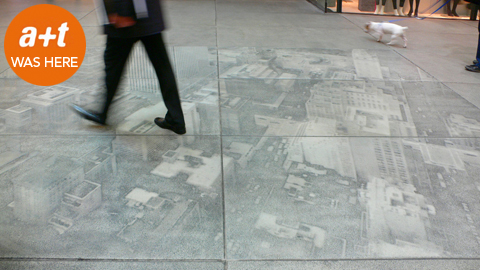
The renovation of this block, in the heart of Munich, is a work of composing in-fills and voids in which that already existing is submitted to the new order, based on the use of the entire ground floor as retail space.
A series of passageways links up with the surrounding streets, each one having a distinct character. In the project several studios took part, within the general urban concept designed by H&dM.
Photos taken by (more...)
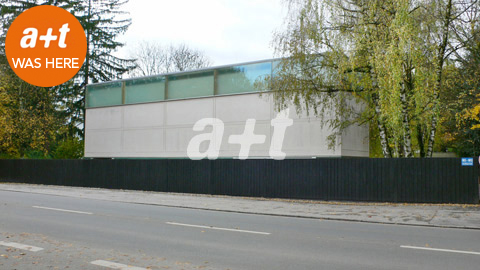
The headquarters of the collection is a small building in the garden of the private house of the owner, Ingvild Goetz, who wanted a space where she could temporarily exhibit some works.
The planning regulations of the residential area where it is located restricted the footprint and the height, such that it is made up of one excavated floor and one upper floor as exhibition space. The floor between, on ground level, houses a library and an office. Initially conceived for private use, .
(more...)
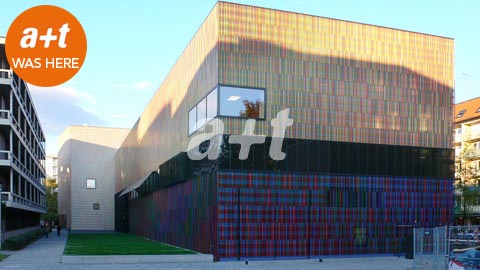
Located in the Museum district of Munich, the new Brandhorst Museum is a rectangular box three-storeys high, including the basement, which houses a private contemporary art collection.
The authors' intention was to create a facade which was also an abstract painting. The exterior skin is made up of several layers: in front of the structure and the insulation layer, comes a sheet of two-tone folded microperforated metal which absorbs traffic noise. In front, the glazed ceramic pieces a.
(more...)
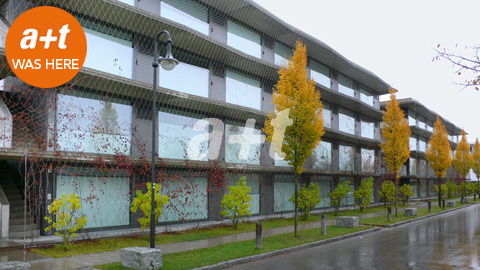
Four years after its completion, the climbing vine has not managed to get past the second storey and the East and West facades suffer the consequences.
The solution for enclosure thought up by the architects is made up of a stainless steel mesh, - which acts as a safety parapet and facilitates the green wall – and of double-glazing with adjustable shutters inside. Some students have decided to add a third layer of sheet aluminium on the inside, as you can see in one of the.
(more...)
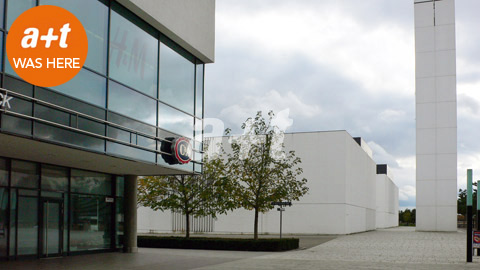
The new city of Riem forms part of Munich's strategy for growth, which is based on three concepts: urban, compact and green. It lies on the the land of the former airport and tries to achieve a liveable environment based on three basic ingredients: home of the Trade Fair and the whole range of associated offices, social housing and facilities for 16,000 inhabitants and a 200-hectare park.
In 1998 the trade fair installations were inaugurated and the first residents started to arrive. Ten years later, Riem is a bustling mixture of workers and residents, with a neighbourhood life revolving around the shopping centre, located in the pedestrian area, and the civic-educational-religious centre designed by Nagler.







 I've read and agree to