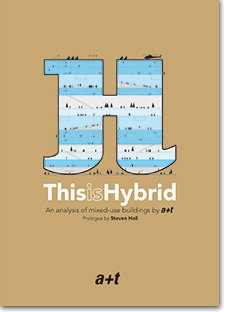
This is Hybrid
This is Hybrid
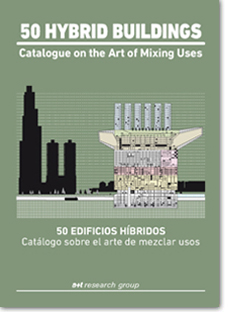
An analysis of mixed-use buildings by a+t. Prologue by Steven Holl

Aurora Fernández Per, Javier Mozas, Javier Arpa
Soft cover (17 x 23.5): 280 Pages
Bilingual: English/Español
Year 2011
978-84-614-6452-4


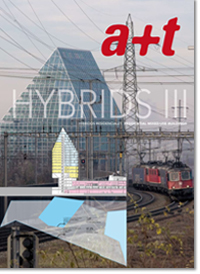
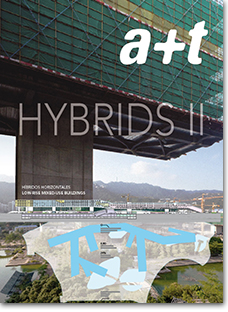
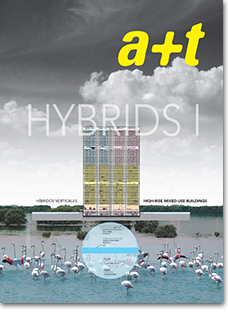
Following years of research, a+t architecture publishers present the first theoretical-practical book on hybrid buildings. Taking its inspiration from the four issues of a+t magazine’s Hybrids series, the book takes a look at the theories and projects which have had the greatest historical importance. Steven Holl prefaces the book with an introduction where he foresees the path which hybrid typologies should take towards the creation of new urban spaces.

articulos
JAVIER MOZAS

... Richard Sennett wrote that a cosmopolitan is someone who moves comfortably in diversity, who is at home in situations which are not connected or parallel to what is familiar to him. Just like hybrid buildings. They are cosmopolitan buildings, placed in fragmented forms that do not correspond, in volumes based on remnants of previous mixed typologies, where its body fits with more or less fortune. They produce a new being with a unifying personality. The following paragraphs define the characteristics and personality of hybrids. They are, consciously, absolute maxims, grouped by themes that point out the categorical and defining, so that their personality traits are as noticeable as possible.

Personality
The personality of the hybrid is a celebration of complexity, diversity and variety of programmes. It is the crucible for a mixture of different interdependent activities.

The hybrid building is a self-tribute to the individual creation of the architect. Each hybrid is a unique creation, without previous models. The very building comes from an innovative idea, which is resolved against the established combination of usual programmes and bases its reason for existence on the novelty of the approach and the unexpected mixing of functions.

The hybrid is an opportunist building, which takes advantages of its multiple skills. The hybrid building looks for unexpected, unpredictable, intimate relationships, encourages coexistence and is conscious that unprogrammed situations are the keys to its own future.

The hybrid shows its many facets and its own personality. As it depends on the individual nature of its creation process, it can take on multiple representations, even apparently contradictory representations, urban landmark, sculpture, landscape or anonymous volume.

The landmark hybrid is not subject to indifference. It is meant to impact the observer. It does not go unnoticed, but publicly manifests its skills, its extroverted character and its attractive points. The hybrid building as a milestone, is an actor in a starring role on the urban stage.

The anonymous hybrid, on the contrary, requires each part of the programme to lose its originality. If it holds a public programme, what is collective will have to dissolve its character and conform to being another simple secondary actor on the daily stage of the city.

Sociability
The ideal hybrid feeds on the meeting of the private and public spheres. The intimacy of private life and the sociability of public life find anchors of development in the hybrid building.

The permeability of the hybrid makes it accessible from the city and the private use of its services extends its timetable to 24 hours a day. This means that activity is constant and is not controlled by private or public rhythms. Another use category is created, a full-time building.

Form
The Modernism insistence upon correspondence between form and function of a building no longer works. The form-function relationship in a hybrid can be explicit or implicit. The first case leans towards fragmentation, the second towards integration.

A generic hybrid is a building-container that attempts a habitat undifferentiated from the diversity of functions that are grouped inside.

The hybrid building will always fight against those segregationist morphologies that allow the escape from some use and looks to unite, inside their area of influence, all of the activities that can provide life to it.

Typology
The primitive hybrid, or proto-hybrid, has not reached the highest point of integration among its functions and is seen as a set of typologies that have not yet been fused. One cannot classify hybrid buildings by typologies, because in the very essence of the hybrid exists the escape from categories.

The hybrid is the consequence of a rebound with tradition, a two-fingered salute to typology.

Processes
The mixture of uses is a part of the general processes of the hybridation. Property and land development can also be hybrid, by means of a combination of public and private developing. Structure can be hybrid, based on mixed solutions of concrete and steel. Construction can be hybrid with dry assembled elements with wet joints, or the same can be done with prefabrication and traditional assembly methods. Management can be hybrid, with individual and community multi-properties.

Programmes
The mixing of uses in a hybrid building generates a potential which is transferred, as in a system of connected vessels, to those weaker activities so that all involved are benefited. Hybrid buildings are organisms with multiple interconnected programmes, prepared to house both planned activities as well as those unplanned activities in a city.

Density
Dense environments with land use limitations are a good field of cultivation for hybrid situations. The hybrid scheme proposes intense environments of cross fertilisation, which mix known genotypes and create genetic allies to improve living conditions and revitalise their surrounding environments.

Scale
Hybrids have the character of super-buildings, super-blocks, megastructures or of Building-as-a-City. As some of the projects included in this issue suggest, they are “urban monsters of a new and generous breed.”

Hybrids are associated with a certain form of grandeur, splendor and gigantism, because mixing implies size and superposition demands height. The taking over of the surface to extend the programme takes up land. It also needs a creative impulse and economic confidence, since it produces new situations inadequate for times of indecision.

The scale of a hybrid and its relationship with the environment is measured by the juxtaposition of programmatic sections. In vertical hybrids, functions are joined by superposition and in horizontal hybrids, by on-floor additions.

City
Because of its scale, urban composition strategies can be added to a hybrid. The definition of a hybrid includes perspective, grid insertion, dialogue with other urban landmarks and interrelationships with the surrounding public space.

Occasionally, what is hybrid is the urban plan, made up of a series of mono-functional buildings gathered around a common stage, which represents most of the citizen theatrical world.

The hybrid goes beyond the domain of architecture and enters the realm of urban planning...


AURORA FERNANDEZ PER

... In the search for models capable of economising resources, Hybrid Buildings, especially those with residential uses, are chance samples that include the gene of mixed-use development in its code. This gene is necessary in order to adapt to the signs of the times. Nevertheless, this mixed condition makes them mistakenly similar to another avant-garde model, a model that at first sight seems to be its predecessor when in fact it is the complete opposite. We are referring to the Social Condenser.

In the first study done on hybrids, Joseph Fenton states that they came about in the first quarter of the 20th century, in order to revitalise American cities and make optimum use of land.
Simultaneously, the constructivist movement brought about the social condenser. It was described by Moisei Ginzburg   as a building designed to transform relationships among citizens in the three areas of the new socialist state: collective housing, clubs and factories.
Both are the fruit of the avant-garde era, when historical events provided a clean slate for many new approaches. The condenser was developed in the recently created Soviet Union, where there was total land availability and the need for housing was urgent.
This was an opportunity for expirimentation that the constructivist architects of the OSA (Union of Contemporary Architects) took full advantage of. In the competition for new residential proposals, organised in 1927 by the group’s journal, Sovremmennaya Arkhitektura, duplex and triplex housing, interior streets and entrance galleries appeared in projects. Ginzburg developed some of these proposals, crystallised in the minimum living cell (27-30 m2), which made up large residential blocks called dom-komuna. They would serve to house the proletarian masses and aimed to influence the social behaviour of its inhabitants. Most of the activities which previously were part of private life, took place in common kitchens, canteens, launderettes or nurseries.

For the first time, the design of circulation considered human fluxes to be an opportunity for events and socialisation. The collectivisation of most domestic functions encouraged women to become part of public life, at the expense of, among other collateral effects, having to endure mutual surveillance and increased control. Reducing privacy in the bedroom effectively helped to get rid of bourgeouis conventionalism.
The social condenser was born of the State, while the hybrid is the offspring of the capitalist system. It is the commercial result of a sum of private interests and subtraction of urban determiners. Speculation and profitability were its parents and the American city was its kindergarten. While the condenser was the manifestation of an ideology, even a homage to architecture , the history of the hybrid was written in accounting books.
On the one hand, the young Soviet state was teeming with experimentation. Modern European architects were affected by this and inserted it into a less inflamed discourse and presented it at the CIAM congresses. On the other hand, land prices spurred the initiative of investors. Europe ignored the development of the American city, where ideology was not part of the programme.
The condenser was the result of functional thinking, which was the guiding light of the constructivist method: “a method indicating with determination which path to follow, and suggesting a solution to the architect’s problems, taking into account the premises he is confronted to”. The hybrid was also the result of functional thinking but on a scale where user flux was just as important as economic flux. While the condenser concentrated all of its transformation capacity on the members of a closed community, –the inhabitants of communal housing, club members, factory workers– the hybrid opened up to the city and encouraged contact among strangers, intensified land use, densifying relationships and left room for indetermination, as opposed to the control that the condenser imposed.
As far as relationships are concerned, in the hybrid they are established outside of the domestic area, while in the condenser, they go into the private realm up to the bedroom door.

So why is there that misunderstanding nowadays between hybrid and condenser? Hybrids are characterised by a mix of uses in the same project. It integrates different programmes which also have different developers, different management and, obviously, different users. This is to say that a hybrid can be as diverse as a city in users, use times and programme.
On the other hand, condensers –developed until the 1980s due to the influence that constructivists had on Le Corbusier and his followers –were mostly buildings with minimum housing where, because of economic and ideological reasons, a series of functions of private life were segregated and converted into public functions. The machine-like vision of housing facilitated the separation of functions as productive processes. Just as productive processes become cheaper as space is maximised, systemisation and compression of vital functions are result in savings for the developer, in this case the State.
The programmatic features of these prototypes, capable of housing over 1,000 inhabitants, spreads out over floor and section with the variety of a small city. The same functions that can be found in a hybrid can be found here, especially in Unités and those that followed, where businesses and even offices were inserted on the so-called inner street. Nevertheless, the difference rests in the fact that each function is thought out not to create intensity and vitality in the city, nor to attract flux of outside users or even to favour mixing and indetermination, but to achieve a self-sufficient and  ‘complete’  building that can isolate itself from the conventional city.
This means that the presence of various subordinate functions on floor and section does not make a housing building a hybrid. Along the same lines, a facilities building that includes a varied public use programme would not be a hybrid, but a modern version of the social condenser, as a club type. Hybridisation is not only in the programme but in initiative, investment and management.

During his delirious route along New York history, Rem Koolhaas, a devoted follower of the constructivists, stops at the Downtown Athletic Club and describes it as a building where the social condenser’s powers of transformation succeeded for the first time.
He does not refer to the communal housing version, but the workers’ club typology.
The high-rise programme of a building dedicated to leisure and physical fitness, where financial district singles went to ‘to reach new strata of maturity by transforming themselves into new beings’ seemed to him to be the culmination of tests done by Leonidov in the 1920s, differing in that the Downtown Athletic Club did not need Stalin’s approval and thus could be built.
It is symptomatic that he stops at this building and compare it to a condenser because, if we pay attention to Fenton, this building is a hybrid because it is made up of a sports club on lower floors, a hotel on upper floors and a restaurant in the middle, for users of both programmes. However, the fact that from one reality such different analyses can be extracted is symptomatic of the potential that those first hybrids held and that the segregation of uses, following the Athens Charter, pushed into obscurity for decades.
The American hybrid was fatally wounded after World War II. Its contemporary, the condenser, had succumbed much earlier, not only in its club version, considered by Stalinists to be too elitist, but also in its domestic version. The dom-komuna were rejected by their own inhabitants, desiring more privacy, and by their managers, who showed that with the technology of the day, they were unmanageable structures.

Nevertheless, these two visions of the world, represented in antagonistic models, the fruit of ideology as opposed to the fruit of money, have continued to reincarnate, whether more or less intensely, up to current times. Throughout the past 80 years, condensers have gone through some defeats, most of them due to the desire to programme and enclose the lives of its users The Corviale or Park Hill cases were the most painful for the model’s defenders. Meanwhile, hybrids have had a time of mutation on the hybrid block to attract investment and facilitate management, with results like the Barbican or Ihme Zentrum, along with other important examples. A selection of both is included in the comparative analysis that follows this text.
In the last ten years, the balance of models to be followed seemed to favour the hybrid. After the theoretic recovery in the 1980s, where we have examples in Steven Holl’s work  and the work of Ábalos & Herreros, among others, it reappeared at the beginning of the 21st century, again as a saviour to American cities through projects such as the Museum Plaza. Devoid of ideology and endowed with great versatility, the hybrid is also finding its place in Europe, not to mention Asia, where the mixing of uses has been inherent in the development of its cities.
The hybrid may possibly have exhausted the power of its antagonist to model human conduct, though not in the way Russian idealists had thought. It may also have added its natural capacity to activate the city. Its vigour as a hybrid favours it in times of crisis, though it does have an Achilles’ heel called financing. It is not a disciplinary prototype, but a concentration of interests. It is not based on tradition but on the future. Its survival depends on consensus. Being confused with a social condenser is really the least of its concerns...


IñAKI ÁBALOS, URTZI GRAU

... Modern architects thought of the skyscraper as associated with the organization of work, with the office. In fact, the prototypic skyscraper of modernity is the expression of such organization; a optimized arrangement for archiving and connecting workers that archive and connect data. This reification of bureaucracy, without and pejorative connotation, was symbolically interpreted in steel and glass rectilinear prisms, artificially climatized, ordered in rings around nodes of communication. Buildings as the Seagram Building in New York gave the definitive and everlasting shape to this conception. That was Modernity with capital M: the triumph of organization, the beauty of organization. Today the skyscrapers under construction are manly located in Asia. They are residential buildings with concrete structures and natural ventilation. Deprived
of any monumental aura, they are consumer products, not exceptional anymore, a norm. Without dramatizing, one can say that all contemporary metropolises are doomed to densification and even the most recalcitrant mayors are beginning to understand
that they have to familiarize with this instrument. Meanwhile, some architects seem abducted by the iconic character of these constructions, as if we were witnessing the terminal phase and mannerist of the history of the typology.
Nothing further from the forecoming reality. ‘Verticalism’, the conception of the space and the contemporary city in vertical terms has only just started. We are witness of a passionate transformation process. We have just begun to think the city from positions that efficiently substitute the bi-dimensionality of urban planning for a new verticalism. Blossoming in the professional work of our generation we see vertical libraries, vertical laboratories, vertical fashion buildings, vertical universities, vertical museums, vertical parks and vertical sport facilities as well as combinations of all them mixed with residential, hotel and office typologies (a.k.a. mix-use buildings), sometimes conforming complete cities in which the section of the of the building becomes what the plan just to be for the city. The successful experience of the modern skyscraper, essentially grounded on the private business, is being rethought in the public realm–or in an agreement between public and private benefit–testing new modalities of urban management that prefigure the future. The incorporation of public and institutional
typologies, caught for years in 19th century conformations, points to certain adaptation also in the institutional domain. The mix identical towers with variety of uses (a.k.a. ‘bundle of towers’) is also an effective and appropriate alternative to large vertical mixuse
in multiple contexts. Compared to the Parisian boulevard, the infiltration of small towers, a sort of acupuncture strategy, has the benefit of a minimized footprint and maximizes its transformative capacity. The public space liberated by a small footprints and the evident sustainability of a synergetic utilization of a mix-use section are factors that are increasing the acceptance of skyscrapers.
The public Space in the Skyscraper–a mix of streets, comercial spaces and parks inaugurated with Central Park–is one of the most successful collective spaces, with an incredible capacity to achieve universal acceptation. It possibly contains the genetic code of the contemporary public space.
This studio is an exploration of the possibilities that the T line, the MTA new subway line under construction beneath 2nd avenue, opens for implementing ‘Verticalism’ and contemporary public space in Manhattan. Originally proposed in 1929, and planned again in 1945, 1947, 1949, 1954 and 1964, under construction in the early 1970s and abandoned in 1975, the new T line is schedule to open in 2014 and to be fully operative in 2020, connecting 125th Street in Harlem with the Lower Manhattan and reorganizing the public transportation in the East side of the island. The public investment that such infrastructure requires is only comparable to the projected real estate benefits that will redraw the blueprint of neighborhoods like el Barrio (East Harlem), Alphabet City or the
Lower East Side.
Taking advantage this future conditions, the students are asked to imagine and design models of development that substitute the omnipresent condominiums for cohabitations between institutional and residential typologies. The final goal is to test different vertiticalist strategies (super tall mix-use, bundle of towers, súper block, etc) in Manhattan. The sites will be defined by subway stations, traditional spaces of experimental cohabitations between public and private developments guarantors of an intense of public use. At least 60% of the program will be residential, while the rest will house a 19th typology (libraries, laboratories, casinos, zoos, observatories, aquariums, asylums, fashion institutes, universities, museums, parks, sport facilities, etc.) ...


projects

1.- Choose version

  • Printed version: 19.00 €

2.- Destination

Choose your country to calculate the shipping costs

BUY NOW

Secure payment with:

Share in Twitter Share in Facebook Suscribe to RSS

close  
condiciones

a+t guarantees to fulfill that which is established by the Spanish Personal-Data Protection Act 15/1999 and all other applicable legislation. a+t adopts the technical, organizational, and security measures required to guarantee confidentiality and integrity of the information.
If you want to unsuscribe from a+t newsletter click here.


close     
condiciones
newsletter
You may receive all a+t's publishing news: publication release dates, project images, details of the published projects, articles, …
Enter your Email:
checkbox I've read and agree to terms and conditions
If you want to unsuscribe click here

close     
condiciones

If you want to become a part of a+t team, please send us your CV here: aplust@aplust.net


close